
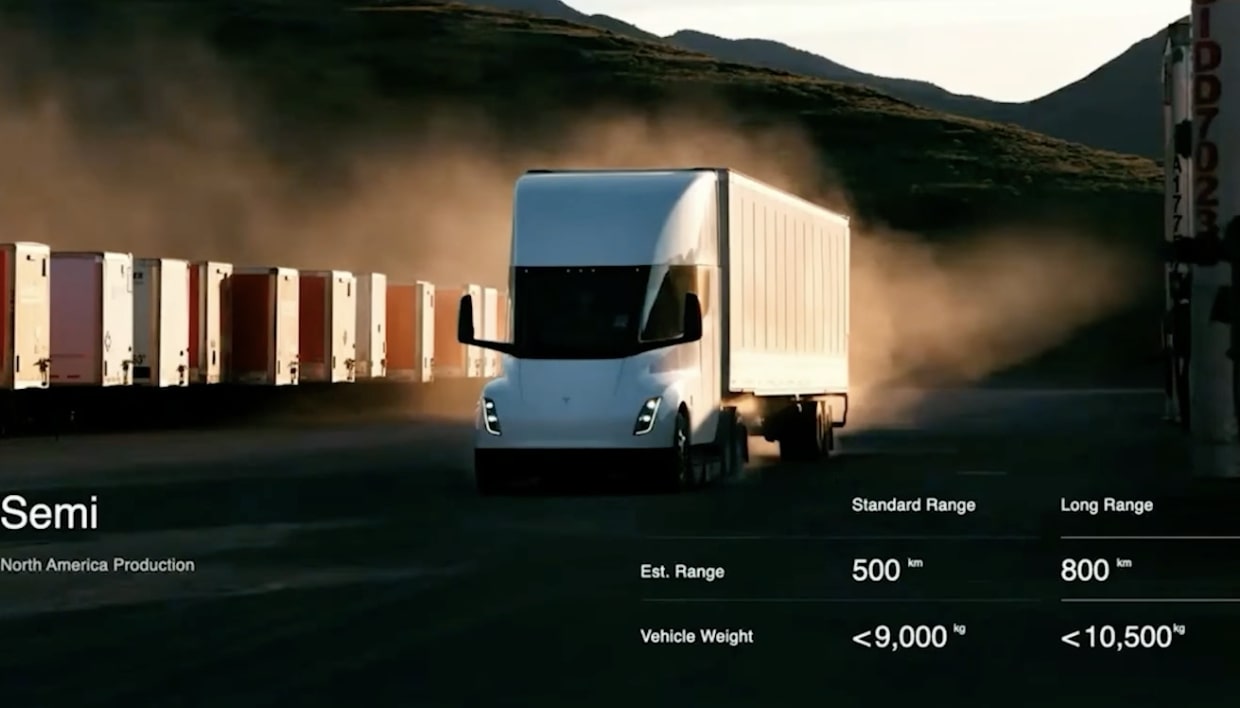
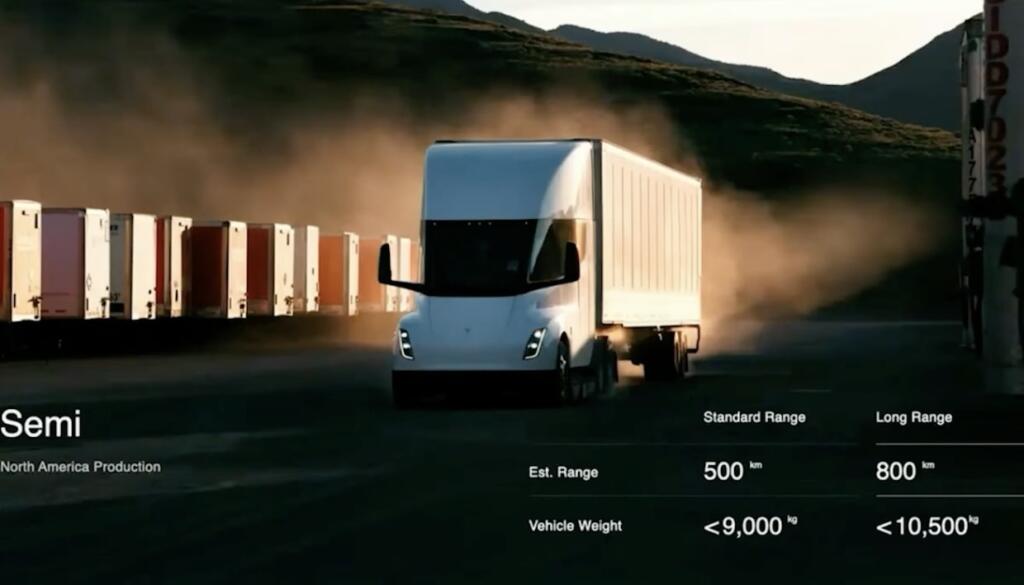
Tesla Semi Program Manager Dan Priestley gave a keynote address and Tesla Semi update at the IAA Transportation show in Hanover, Germany on Tuesday.
The Pepsi drivers who use the new electric Tesla Semi say that do not want to go back to driving diesel trucks.
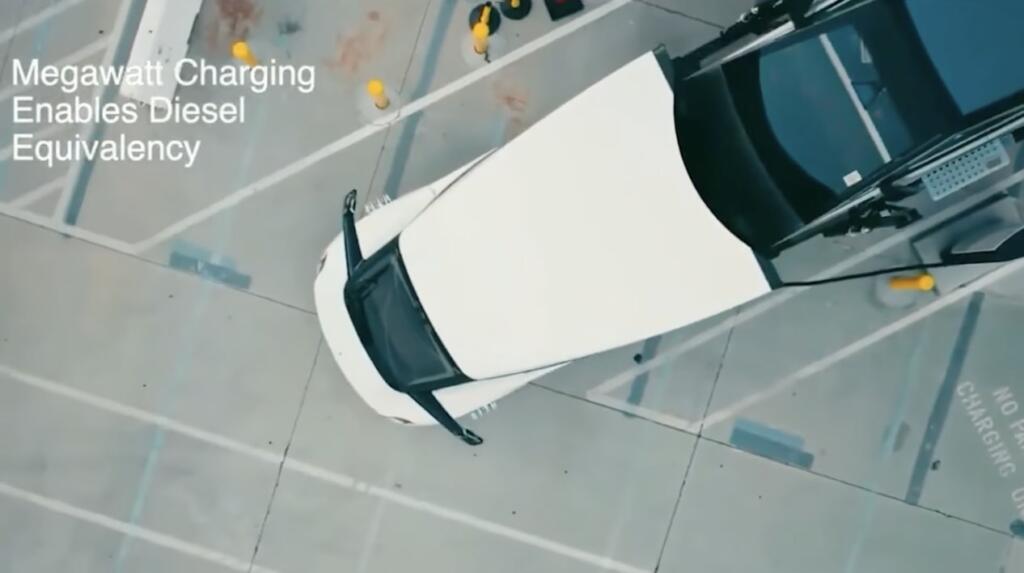
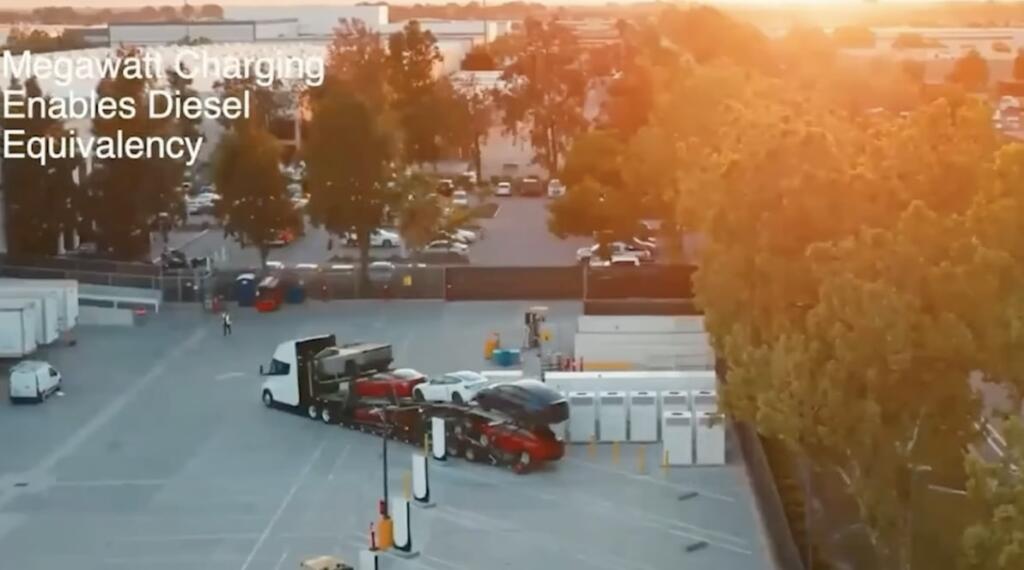
Tesla has deployed megawatt charging that will charge the trucks in times similar to fueling a diesel truck.
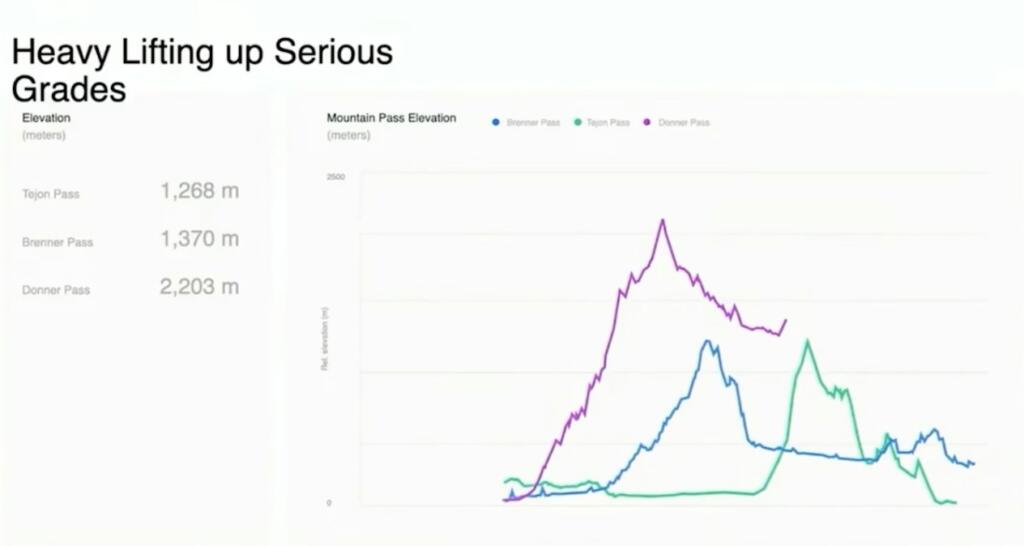
Tesla’s pilot test fleet has already driven over 7.5 million kilometers (4.65 million miles), and that a single Tesla Semi has covered an impressive 400,000 kilometers (248,000 miles) over the past 18 months. Priestley clarified this was real world mileage, and not simulated, all while operating at the Semi’s maximum gross vehicle weight rating (GVWR).
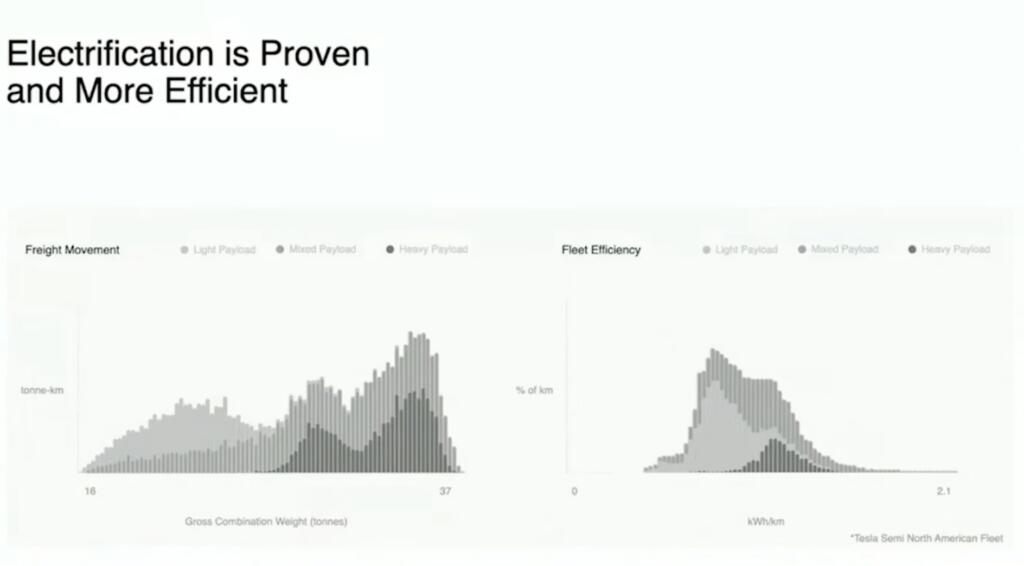
Tesla Semi has eenergy consumption rate of approximately 100 kWh per 100 kilometers. This is about 1.61 kwh per mile. Tesla Semi is already proving more efficient than previously estimated, with further improvements expected as the fleet scales.
The new Tesla Semi factory in the US will finish next year and will scale to production of over 50,000 units per year.
After Tesla has US Semi trucks at scale in the US they will then turn to Europe. Tesla will also go to Asia. Asia has most (70-80%) of the heavy trucks in the world. China alone has about half.
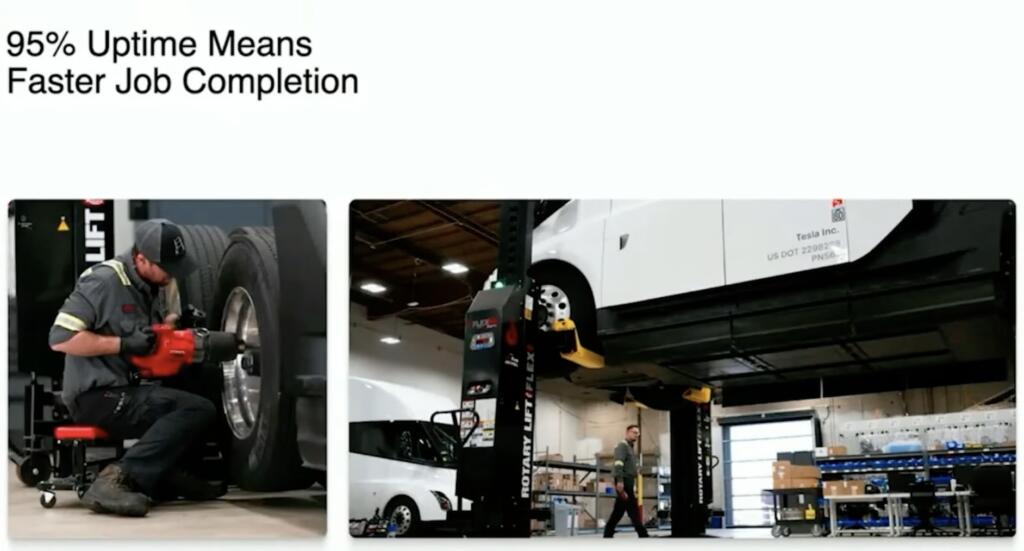
Priestly indicated there were reliability issues with the early Tesla Semis. However, those issues have been solved. Tesla is making the economics of the Semi great and have proved the reliability with over 95% uptime.
A massive part of the ramp of Tesla Semi and electric semis is to get a large charging network. One Megawatt charging would only support a maximum of about 20 Semi trucks. It is likely that at least one megacharging port would be needed for every ten trucks. 50,000 trucks would need about 5,000 megacharging ports. Each megacharging port is like three supercharging ports. There are about 30,000 supercharging ports in North America. 50% more charging would be needed for the first full year of volume Semi truck production.
Electric trucks can charge at the same time as they are loading and unloading when the charging is built for the primary location where they are loading and unloading. A diesel truck cannot be fueled while it is being loaded and unloading.
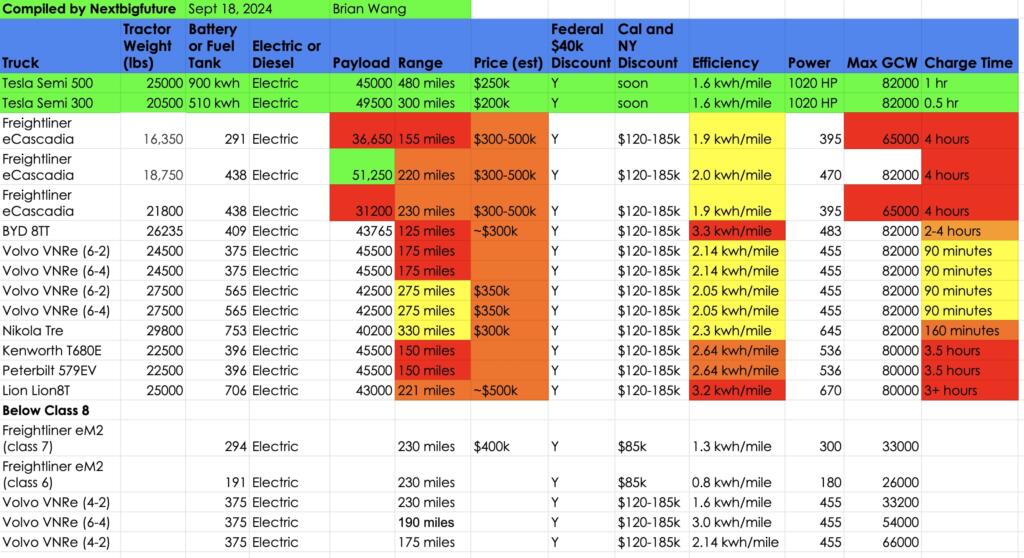
I, Brian Wang at Nextbigfuture, have created a table comparing the specifications of electric trucks based upon company data.

Brian Wang is a Futurist Thought Leader and a popular Science blogger with 1 million readers per month. His blog Nextbigfuture.com is ranked #1 Science News Blog. It covers many disruptive technology and trends including Space, Robotics, Artificial Intelligence, Medicine, Anti-aging Biotechnology, and Nanotechnology.
Known for identifying cutting edge technologies, he is currently a Co-Founder of a startup and fundraiser for high potential early-stage companies. He is the Head of Research for Allocations for deep technology investments and an Angel Investor at Space Angels.
A frequent speaker at corporations, he has been a TEDx speaker, a Singularity University speaker and guest at numerous interviews for radio and podcasts. He is open to public speaking and advising engagements.
Tesla should offer a motor/generator set option for cold environments. The waste heat from the engine could warm the cab, and batteries while the truck is moving, or parked. Once the electric motor, and batteries are providing enough heat, it would be turned off.
Compared to BYD, Tesla is moving extremely slowly, I rememeber ‘ramp’ articles for Semi from years ago. I am following BYD on twitter and it seems, every month they introduce new car model or factory. Tesla needs to seriously accelerate or it will have huge problems globally. US is not big enough to have ‘big future’ and grow to 10-20T valuation. Europeans will, in time, switch to domestic brands( already happening).
There is hope in Tesla bot, but let’s not forget, there are tons other bots and I am pretty sure BYD soon will also introduce and mass produce its own humanoid robot. It might be rough for Tesla during the next few years.
When you write”ramping ” you mean some indefinite time in the future, very loose use of words.
Tesla needs to build partnerships with large trucking companies. I used to work with Schneider Trucking, a large USA trucking company. Trucking companies could work with Tesla to build out “truck drone” networks that would operate dominantly at night (10PM to 6AM). The trucks could autonomously navigate the interstate network (in USA), get to “intermediate depots” or once at a given exit, turn control back over to a trucking company drone operator to drive the truck to its final destination. Obviously, this involves a lot of DOT network buildout (in USA). Also, a buildout of many large trucking companies switch yards so they have immediate access to existing interstate infra.
There are about 3M class 8 Semi truck tractors in the U.S. and over 10M medium duty – that Tesla can make versions of. The market is large enough to absorb Tesla production of Semis for quite a few years without needing a full network of Megachargers by just focusing on customers (like Pepsi) that operate “milk runs” with daily round trips from a central facility that can handle all charging. Beyond that some customers only follow a few routes that could be covered by a small number of mega chargers. Tesla can build out Megachargers in a methodical way as it ramps up production of Semis by targeting different groups of customers. Long distance truckers that travel randomly from point to point and need a full network of Megachargers don’t need to be served until the rest of the industry is saturated.
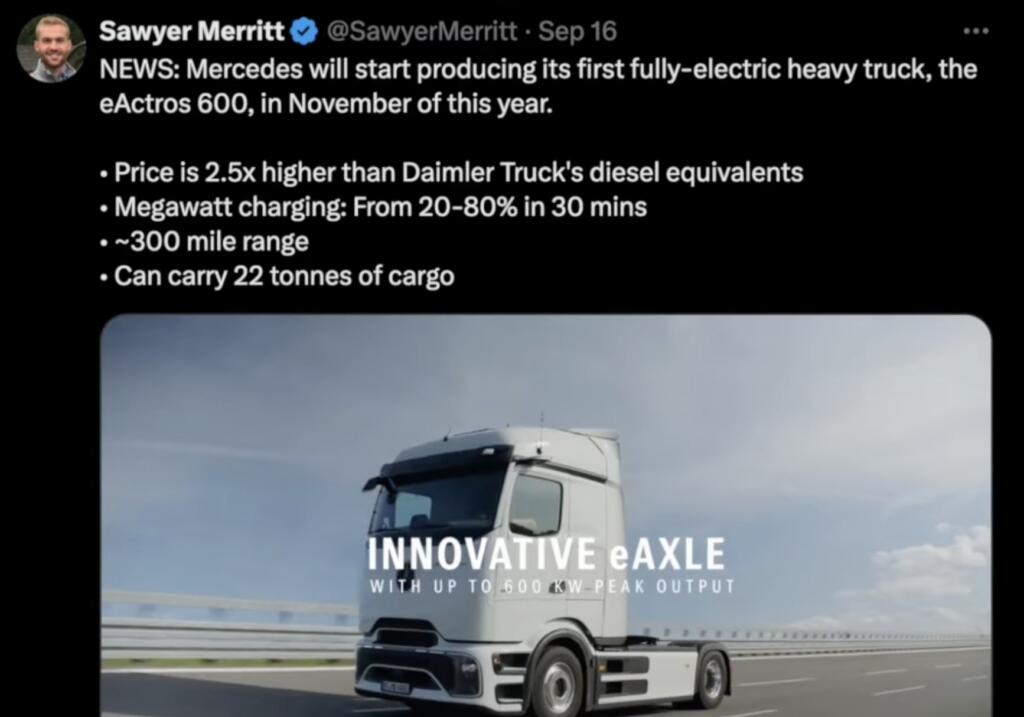
In my humble opinion, Mercedes should be a bit more creative designing the truck cabin. No Diesel engine, no fuel tank and batteries at the platform should leave space for a slighly more aerodinamic cabin maintaining the habitability, I think. If this gave 20 extra miles, these are welcomed and the machine would looks more interesting.
The energy consumption per mile likely represents driving in California, which has a statewide 55mph limit for trucks and lots of traffic to further slow operations.
Efficiency is lower at higher speeds.
Much charging can be done at lower power. Single shift, return to base operations might use 72kW charging overnight and rarely require megawatt charging.
Every other heavy electric truck company is failing badly at deploying charging and blaming the electric utility. Tesla will easily eat this market.