

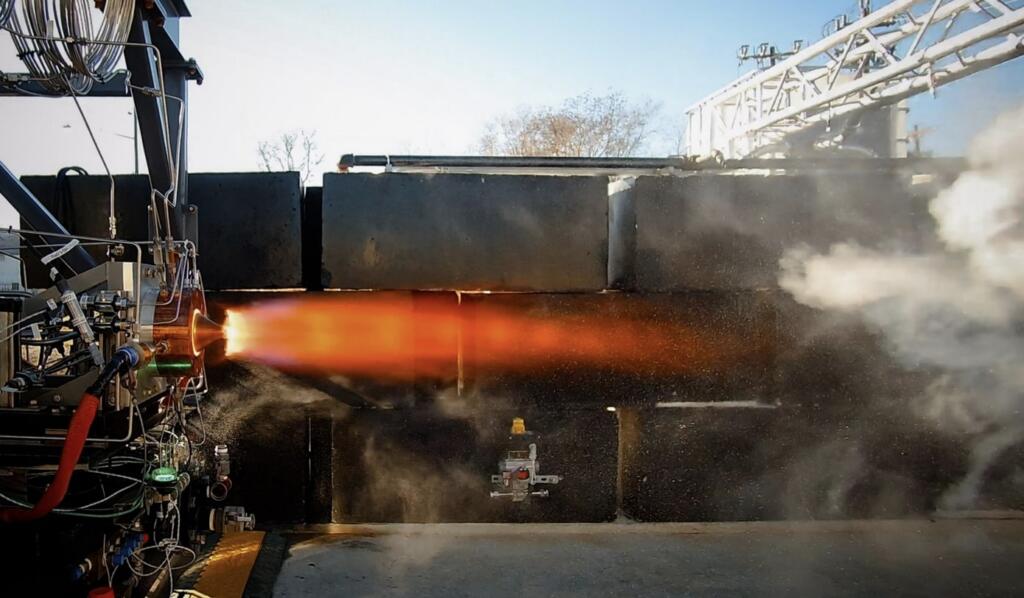
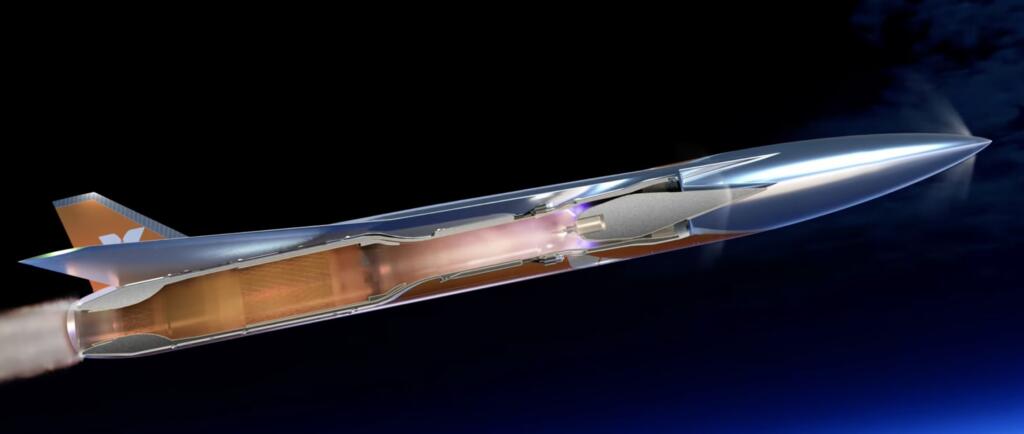
Venus Aerospace advanced propulsion system is engineered to power high-speed vehicles, including drones and aircraft, enabling them to travel vast distances at high altitudes and achieve high-Mach speeds with unmatched efficiency. The VDR2 combines the high thrust and efficiency of the Rotating Detonation Rocket Engine (RDRE) with the high efficiency cruise of a Ramjet. This offers a single engine from take-off to as fast as Mach 6, with a streamlined airflow design for low drag, and eliminates the need for complex mechanical components.
Venus Aerospace integrated a Rotating Detonation Rocket Engine (RDRE) with a regular ramjet for the VDR2 engine.
Speaking at Up.Summit, Dr. Andrew Duggleby unveiled the engine and said, “This engine makes the hypersonic economy a reality. We are excited to partner with Velontra to achieve this revolution in high speed flight, given their expertise in high-speed air combustion.”
“We can’t wait to dig in, make the first one fly, and ultimately perfect an engine concept that has lived mostly in textbooks but never as a production unit in the air,” says Eric Briggs, Velontra’s Chief Operating Officer. “We couldn’t think of a better partner than Venus. Rocketry pioneers in their own right, and ready to tackle the hard problems, we are eager to fly the same path with them.” Combining technologies allows both Venus Aerospace and Velontra to take tangible steps toward their shared vision of unlocking the high-speed flight economy in the commercial and defense sectors.
A Rotating Detonation Rocket Engine (RDRE) overcomes the limitations of a rocket or jet engine by using another novel principle. The RDRE part of the VDR2 consists of two coaxial cylinders with a gap between them. A fuel/oxidizer mixture is squirted into the gap and ignited. If the detonation is configured properly, this generates a closely coupled reaction and shock wave that speeds around inside the gap at supersonic velocity that generates more heat and pressure.
The VDR2 will have the high thrust and efficiency needed to power an aircraft to speeds of up to Mach 6 and an altitude of 170,000 ft (52,000 m) and is 15% more efficient than conventional engines, if Venus Aerospace meets its current design goals.
The VDR2 will take flight in Venus’ hypersonic flight test drone in 2025.
Venus Aerospace, founded in 2020 by Andrew and Sassie Duggleby, is a venture-backed startup that has raised $70M to develop reusable high-speed technology, revolutionizing and redefining the boundaries of aviation, defense, and beyond. Dedicated to pioneering dual-use hypersonic technology, Venus has achieved all engine milestones and successfully flew its inaugural supersonic drone in February 2024.

Brian Wang is a Futurist Thought Leader and a popular Science blogger with 1 million readers per month. His blog Nextbigfuture.com is ranked #1 Science News Blog. It covers many disruptive technology and trends including Space, Robotics, Artificial Intelligence, Medicine, Anti-aging Biotechnology, and Nanotechnology.
Known for identifying cutting edge technologies, he is currently a Co-Founder of a startup and fundraiser for high potential early-stage companies. He is the Head of Research for Allocations for deep technology investments and an Angel Investor at Space Angels.
A frequent speaker at corporations, he has been a TEDx speaker, a Singularity University speaker and guest at numerous interviews for radio and podcasts. He is open to public speaking and advising engagements.
Rotating detonation engine’s became interesting (to me) when they could use air breathing technology to possibly achieve hypersonic travel threw our atmosphere. Not using rockets (like our X-15, of many decades ago), But technology up to now, has for hypersonic airbreathers’ blown up, or burned up, along with whatever vehicle their part of. Though this article does not detail how “this” works (it was long on jargon, short on detail), I think an “intermittent combustion process” makes sense. Saves wear and tear on the parts, I can only imagine. This may be the key (until we develop “better parts”). Will keep watching.
SR-71 have commbined turbojet And ramjet. It was most eficienci ramjet engines in USA, but only until 3.5 M.
But, Russia have zircon rocket. It have ramjet And rocket buster…until 9 M