

SpaceX has massively accelerated the development of space. Predicting the speed of space development requires predicting the financial future of SpaceX. This is because if trillions of dollars of profits each year can be used to increase space development then this will be far more than $2 billion/year of the NASA budget that is actually used to develop space and space technology.
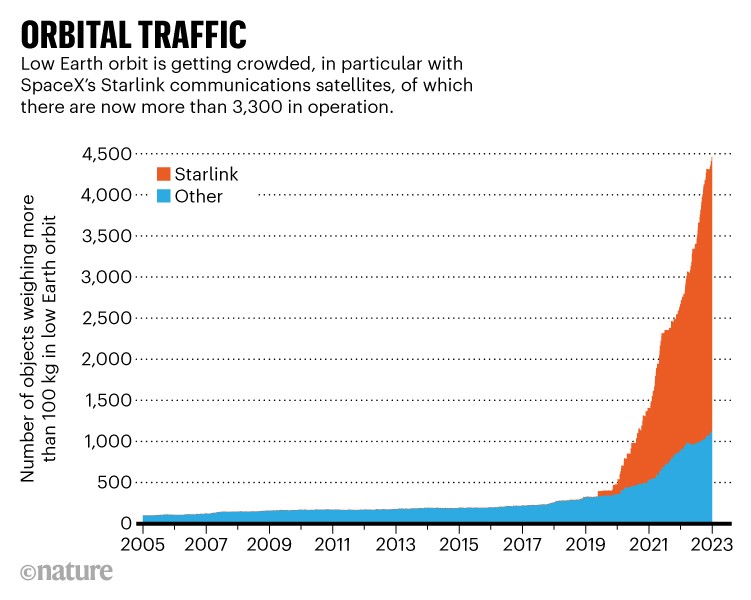
SpaceX started launching Starlink satellites in 2019. There were only about 300 one hundred kilogram or heavier satellites in low earth orbit in 2018. There are now over 8000 and this is because of SpaceX launching 7000 Starlink satellites and a few hundreds satellites for other companies

SpaceX has launched 90% of all payloads into space in 2024. This is ten times more than the rest of the world combined. The rest of the world meaning all of the other countries like China and Russia.
SpaceX is also a profitable company and will become very profitable by offering Starlink services commercially with over $10 billion in revenue now with about 4-5 million customers.
SpaceX will also get a lot of military and government contracts. The Pentagon has increased its military satellite internet services budget from $900 million to $13 billion over the next five years. The vast majority of the military launch and military satellite business is going to SpaceX.
Starlink with the fully reusable super heavy Starship will launch 42,000 Gen 3 satellites with each having ten times the bandwidth of Starlink Gen 2 mini satellites.
This will be able to support 400 million to 1 billion global high speed internet customers and about 6 billion customers for direct to cellphone service.
The 42,000 satellite constellation can be deployed in 2026-2027. The full global customers could get sold, dishes deployed and new cellphones deployed by 2028-2029.
This will be over $1 trillion per year and the profits margins could be 90%.
SpaceX will grow global communications and internet and have other businesses. This will only increase in the 2030s and 2040s.
SpaceX will take over transoceanic package delivery from cargo planes.
SpaceX will get approvals for even more satellites and launch satellites for more than just communication. How much revenue and profit will this grow to by 2040? 2050?
What is beyond communication? There is energy from space based solar.
By 2030 there could be a few thousand SpaceX Starships and Super Heavy boosters and a hundred launch towers.
By 2040, 40,000 large cargo and passenger planes could be replaced with 20,000 SpaceX Starships for earth based transportation. The SpaceX starships would cost about $6 million each and would be reusable. The boosters could cost $24 million each. The large commercial jets cost $300 million each. The interplanetary fleet could be tens of thousands of Starships. The limitation would not be how many we could affordably build but deploying them for large enough use cases. The world fleet of 40,000 large planes costs $10 trillion over thirty years. 10,000 Starships would cost $60 billion. 10,000 Starships with boosters would cost $300 billion.
Ten thousand Super Heavy Starships flying twice per week into orbit could deliver one million payloads per year. Those payloads could be 300 tons with more advanced rocket engines. This would be 300 million tons. This would be about 100,000 times more than the payloads put into space now.
This level of payload means it would be trivial to launch massive construction into space to build giant solar sails or to accelerate testing and development of interstellar flight propulsion systems.
Terawatts of space based solar would be able to power massive laser pushed sail propulsion.
The development of space for the next 25 years will not be at the pace of the last 60 years. We have already increased payloads by ten to twenty times and this will increase 100,000 to 1 million times.

Brian Wang is a Futurist Thought Leader and a popular Science blogger with 1 million readers per month. His blog Nextbigfuture.com is ranked #1 Science News Blog. It covers many disruptive technology and trends including Space, Robotics, Artificial Intelligence, Medicine, Anti-aging Biotechnology, and Nanotechnology.
Known for identifying cutting edge technologies, he is currently a Co-Founder of a startup and fundraiser for high potential early-stage companies. He is the Head of Research for Allocations for deep technology investments and an Angel Investor at Space Angels.
A frequent speaker at corporations, he has been a TEDx speaker, a Singularity University speaker and guest at numerous interviews for radio and podcasts. He is open to public speaking and advising engagements.
Kind of hard to wrap your head around what the presence of something like SpaceX means.
In the old projections, the idea was to have a thriving space market coming from the kickstart of a generous public investment.
E.g. commercial versions of the Shuttle, carrying 50-60 passengers to LEO and iterations of it allowing to build the High Frontier.
What was hard to imagine was a single actor that was so preponderant and ahead of the rest, that only China dreams to compete with them. SpaceX is truly the ASML of space launchers.
An industry in slumber with a company planning millions of tons per year. And taking over all the basic parts of it (self funding, comms, rovers, spacesuits, power, life support), because no one else would or wouldn’t do it in time or at the scale needed.
I’ve been watching the build of an aluminum expeditionary sailing catamaran on YT.
https://m.youtube.com/watch?v=cHi5BhyIHmk
Especially interesting is how the hull comes as a flat pack kit of precut pieces to be welded up in the yard.
A relatively low-budget project of a couple of Youtubers with a desire for adventure.
There are dozens of $100,000,000+ private yachts on the water.
And how many private islands are there? One in Montana is for sale right now, if you’ve the $75,000,000 cash on hand.
I can see a time in the nearish-term when billionaires with the desire and scratch commission “Space Yachts” –private stations in LEO.
Even simply buying one-way Starship hulls, tricked out by Italian yacht designers or Crate & Barrel, to be “moored” at a pre-stationed hub/club house, with all the amenities.
More ambitiously, the Saudi’s Line City kinda looks like a practice run for a ring colony.
What is the effect of extreme amount of heavy lift launches to the upper atmosphere?
Can those effects be mitigated?
Maybr good if we look into that before having another unforeseen environment problem.
Starship upper stage has a total 1200 ton of propellant. At ideal chemical ratio that would be 240 tons CH4 and 960 tons O2, which would combust into 660 tons of CO2 and 540 tons of H2O, per launch. I’m not counting the booster, because it doesn’t reach the upper atmosphere AFAIU, but roughly, it has 3 times as much propellant, in the same ratio. So x4 for the whole stack.
So for each 1000 launches, you get roughly half a million tons each of CO2 and water vapor dumped by the upper stage.
The upper atmosphere is considered everything above the troposhere, and has about 20% of the total atmospheric mass, and about 1% of the water vapor. So about 10^15 tons total upper atmosphere mass, and about 10^11 tons (a little more) of water vapor up there. Even a million launches, which is half a billion tons of water vapor dumped, would still be 200 times less than what’s already up there. 0.5%.
I’m less clear on the CO2 in the upper atmosphere, but in total, at 400ppm, there’s about 2 trillion tons of it (2*10^12) in the whole atmosphere.
So I don’t think it would have a significant effect on its own.
Maybe influences the weather in Africa a titch.
Greening up the Sahara as a knock-on effect.
Brings back the rains to the Richat Structure in Mauritania.
The watery rings of Atlantis refilled….
This is the kind of productive enterprise that the Democrats increasingly wanted to inhibit. This, covid-19 policies, and the attacks on free speech make clear we dodged a bullet in Kamala/Walz.
Aye.
The other aspect that can’t be forgotten is that Musk bet HUGE on Trump. Arguably he is the single greatest reason Trump win with both the financials AND Twitter buy.
I can damn well bet Trump will be all in with the Fed supporting Starship
The COVID policies were Trumps policies?!
In this case, SpaceX could re-envision/ expand into a Space Logistics Company bringing anything, anywhere within the inner solar system: outposts, satellites, autonomous expolitation/ development, early habitat/ storage. Just spread those ships into every orbit, promising NEO, and useful radiation-protected nook and cranny – most one-way, but perhaps not all?
I live near an airport. At any hour of the day or night, large aircraft fly over at relatively low altitude. It’s a little noisy, but no dangerously so, you get used to it pretty quickly. If not for that, I could pretend my backyard was in unspoiled wilderness.
If you were launching Starship sized rockets from that same airport, the best case scenario is that I’d be deaf, I might actually have to regularly replace broken windows.
It really does not matter that you could make an economic case for rockets being cheaper than aircraft for long ranges. Rockets are too noisy to be launched from anywhere populated!
You’d have to have isolated space ports, perhaps floating platforms off the coast, and that would require something like hyperloop to get people to and from them in a reasonable time. I don’t think you can make the case for that complete system.
The SPS case is much stronger, though.
Why a hyperloop? What is wrong with a ferry? The launch sites wouldn’t need to be THAT far out. People were observing the launches, what, 7 miles out?
If you’re traveling to the launch site in an exposed vehicle, the noise level returns to being a problem; You can’t launch while an occupied ferry is anywhere nearby. While the hyperloop under the surface of the water can run irrespective of launch activity.
I think SpaceX has recognized that for a long time but just decided that they needed to prioritize developing the stage zero and workflow before they could get serious about the offshore platforms. Musk’s electric VTOL supersonic jet notion could serve these platforms pretty efficiently. There’s also a lot of room for new development of landing stuff from orbit in many more places than Starship launches it.
Cheap launch makes space solar energy near term inevitable.
Energy is an enormous market compared to telecom. The dollars and amount of material needed in space are orders of magnitude higher.
Naturally, if you are putting TWs of microwaves in space, you’re probably putting GWs of lasers in space for space defence. With space solar energy, Ronald Reagan’s Star Wars becomes near term inevitable.