

Experimenters have had overnight tests confirming they have OPEN SOURCE DeepSeek R1 running at 200 tokens per second on a NON-INTERNET connected Raspberry Pi.
This is a distilled smaller model than the OPenAI O1 class model.
Folks, I think we have done it!
If overnight tests are confirmed we have OPEN SOURCE DeepSeek R1 running at 200 tokens per second on a NON-INTERNET connected Raspberry Pi.
A full frontier AI better than “OpenAI” owned fully by you in your pocket free to use!
I will make the Pi… https://t.co/eSlHkQ7kQD pic.twitter.com/tVBg9oXtzB
— Brian Roemmele (@BrianRoemmele) January 23, 2025

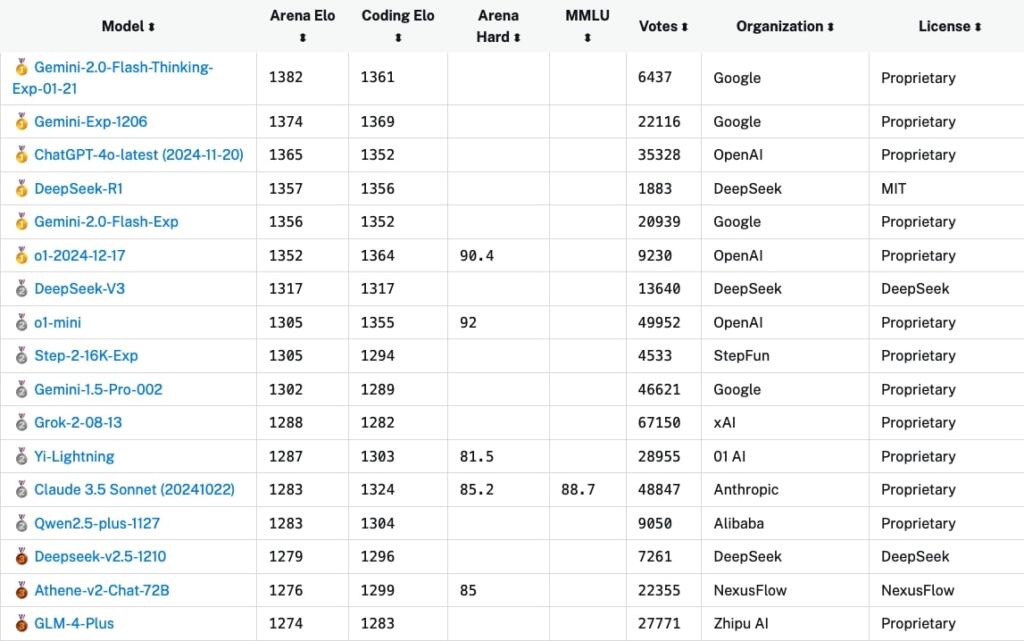
Even though it is the smallest of the distilled models that model still outperforms GPT 4o and Claude Sonnet 3.5.
The 7B parameter models crush the older models on performance benchmarks. The 14 billion parameter model is very competitive with OpenAI o1 mini in many metrics.
A good laptop can run the 7B and even the 14B parameter distilled models from Deepseek.
UPDATE – Other AI LLM Tests on Raspberry Pi5 16 GB $120
There is a new article referencing different youtubers testing other 13 billion to 14 billion parameter LLM models on a $120 Raspberry Pi5 16GB. There are other options for Intel minis around $150-200 and used GPU systems. Those larger models runs but with 0.5 to 2.0 tokens per second.
Running Deepseek 1.5B Versions on Nvidia Jetson Nano
OpenAI O1 mini
To achieve a throughput of 200 tokens per second with the o1-mini model, which is more than double its reported empirical throughput, would likely require:
Powerful GPUs: Multiple high-end GPUs, possibly NVIDIA A100 or newer models, would be necessary to handle the increased processing load.
Substantial Memory: Given the large context window of 128K tokens, a significant amount of GPU memory would be required to maintain the model’s state and process requests efficiently.
Fast CPU: A multi-core, high-frequency CPU would be needed to manage the data flow and coordinate GPU operations.
High-bandwidth Network: To handle the increased data throughput, a high-speed network interface would be essential.
Rate Limits: OpenAI imposes rate limits on their models, which may prevent achieving 200 tokens per second in practice without special arrangements
Cost Implications: Running the model at such high speeds would incur significant costs. The o1-mini model is priced at $3 per million input tokens and $12 per million output token.
Running the o1-mini model at 200 tokens per second would require enterprise-level infrastructure and likely special arrangements with OpenAI. It’s also possible that such high-speed processing might not be supported or recommended for this particular model.
DeepSeek Available Online With Free and Paid Version and Versions for Your Laptop
The huge increase in capability with a team of just over 100 developers is causing panic at Meta and other AI companies.
All AI competitors will have to rethink and rework what they are doing.
Everyone who is using AI needs to include using the online version of Deepseek and download Deepseek open source for local AI.
There are various videos to guide you through installing and setting up Deepseek.
I have installed the distilled 7B Qwrn and distilled Llama 8B models using LM Studio for local usage.

Brian Wang is a Futurist Thought Leader and a popular Science blogger with 1 million readers per month. His blog Nextbigfuture.com is ranked #1 Science News Blog. It covers many disruptive technology and trends including Space, Robotics, Artificial Intelligence, Medicine, Anti-aging Biotechnology, and Nanotechnology.
Known for identifying cutting edge technologies, he is currently a Co-Founder of a startup and fundraiser for high potential early-stage companies. He is the Head of Research for Allocations for deep technology investments and an Angel Investor at Space Angels.
A frequent speaker at corporations, he has been a TEDx speaker, a Singularity University speaker and guest at numerous interviews for radio and podcasts. He is open to public speaking and advising engagements.
I’m probably going to try the 7b and 14B models. If anything, it’ll be interesting. I’m already running a couple of uncensored LLMs. They’re pretty interesting. They’ll tell you anything you want, even if it’s not entirely correct.
I’m getting 8 tokens/s on just a Ryzen 5600H mini PC w 16GB RAM, no other GPU.
The reasoning for 1.5B model is pretty bad. Of course you cant expect something more for what runs on desktop. 32B is better. Some things does pretty nicely for what runs on local desktop it is fine. But you cant expect to match o1.
Presumably using a USB Tensor accelerator like Coral.ai.
The problem with the 200 tokens per second is the latency between the end of the input and the start of the output. That is also discounting the time to read the input tokens before the output can be processed.
The alternative approach they may be taking is to employ sparse compute on the matrix math by not calculating on any input below a threashold, which impacts the accuracy.
ChatGPT 4o calculations about this news lol
Assumptions:
The Raspberry Pi likely runs inference on its CPU (possibly an ARM Cortex-A76 or similar).
An RTX 3060 has 3,584 CUDA cores and is optimized for AI workloads via Tensor Cores.
A modern desktop CPU (e.g., Ryzen 5600X or Intel 12600K) is significantly faster than a Raspberry Pi.
GPU acceleration (via CUDA) provides an exponential speed boost compared to CPU-only inference.
Estimation Process:
CPU vs Raspberry Pi:
A mid-range desktop CPU is roughly 50x to 100x faster than a Raspberry Pi in raw computation.
GPU vs CPU Acceleration:
Running AI models on an RTX 3060 typically provides a 10x to 50x boost over CPU-based inference, depending on model optimizations.
Estimated Token Speed:
On a good desktop CPU alone: Likely 10,000 to 20,000 tokens per second (50x to 100x Pi speed).
With an RTX 3060: Potentially 100,000 to 500,000 tokens per second, depending on model optimization.
Final Estimate:
With proper GPU acceleration, you could expect 100,000+ tokens per second on an RTX 3060, which is orders of magnitude faster than the 200 tokens per second on a Raspberry Pi.
This would make the model real-time or near-instant for almost any application on a home PC!
————————————————–
A distilled and high-speed AI model like DeepSeek R1 running at 200 tokens per second on a Raspberry Pi (and potentially 100,000+ TPS on a gaming PC) could be a game-changer for AI-driven NPCs in video games. Here’s why:
Advantages of a Fast, Distilled AI for Gaming NPCs
Real-Time Interactivity 🚀
Many current game AI systems use scripted dialogue trees and limited decision-making.
With a high-speed LLM, NPCs could generate dynamic responses instantly.
Players could have unique conversations every time they interact with an NPC.
Low Latency NPC Decision-Making 🏃♂️
Game AI often relies on pre-scripted behavior trees.
An efficient LLM could simulate human-like decision-making in milliseconds.
NPCs could adapt on the fly to player actions instead of following pre-set patterns.
Local Execution & Privacy 🔒
No need for internet-dependent AI services (like ChatGPT API calls).
AI-driven NPCs would work offline, making it great for single-player and modding.
Players could even tweak their own local AI models to modify NPC personalities.
Dynamic Quest & Story Generation 🎭
Instead of static quest scripts, NPCs could generate procedural quests that feel organic.
AI-driven factions and procedural storytelling could evolve dynamically as players progress.
Scalability & Modding 🎮
Modders could fine-tune NPC behaviors or add new personalities without waiting for official patches.
AI-driven enemies, traders, and side characters could behave in unique ways based on player history.
I think it’s even more impressive it is a raspberry PI.
Other models, even distilled, would struggle at around 10 tokens per second on a raspberry PI.
I will be content when I can run it at a 386 DX 40 with 4MB RAM
Tried the low token version in my computer. Meh. Pretty bad and limited.
It is not just the gpu power, better coding!!!!
I will try to run it from my computer.