
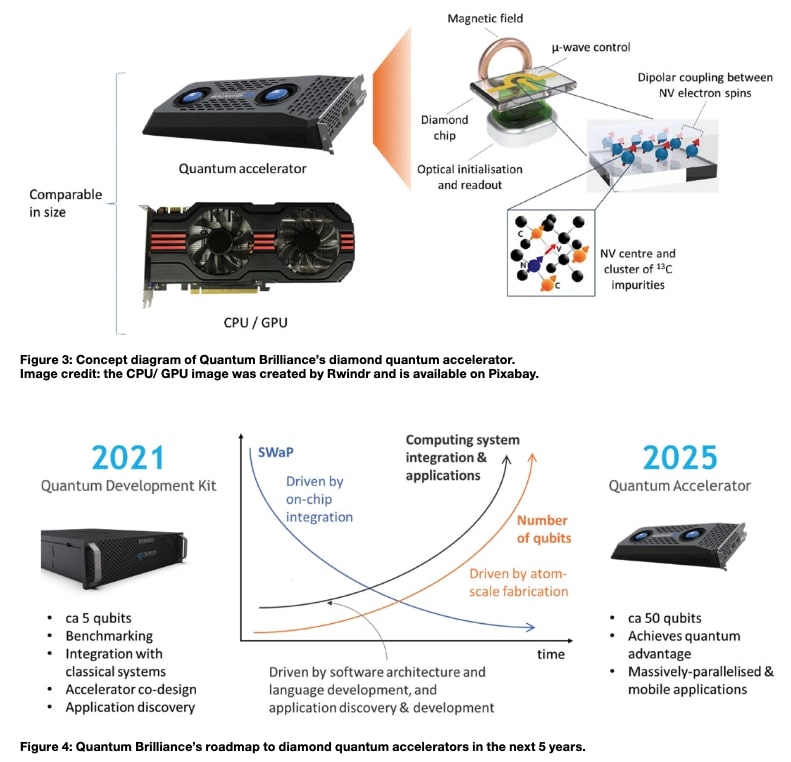
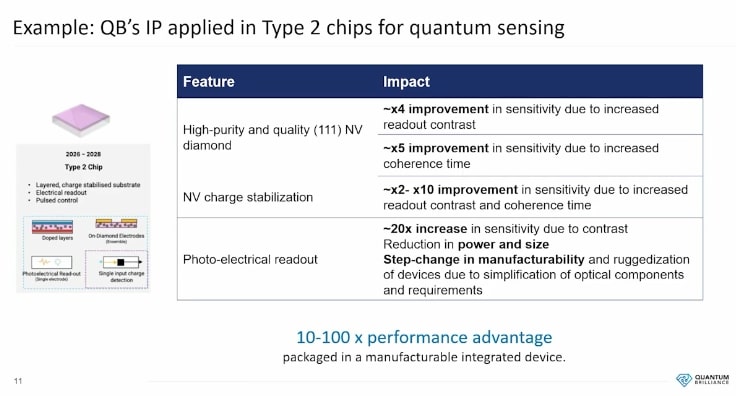
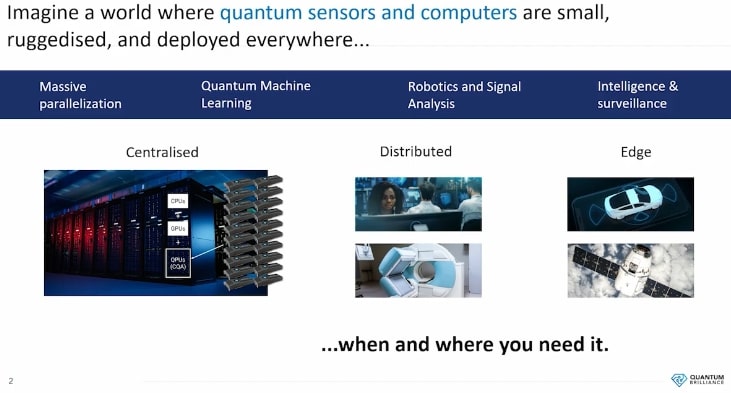
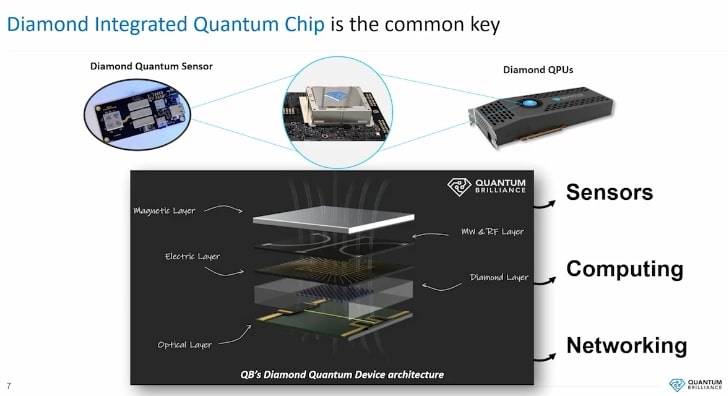
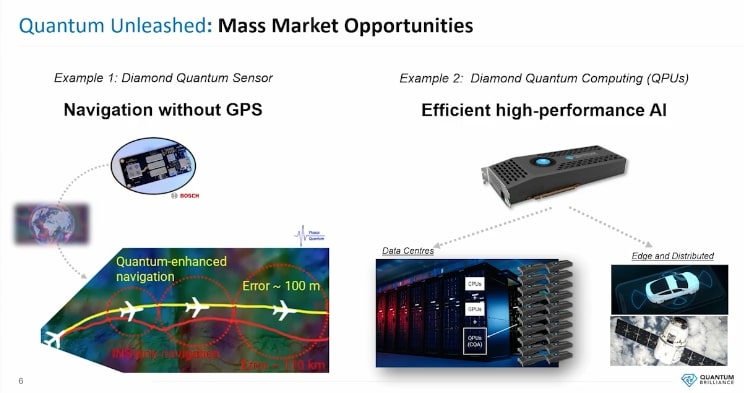
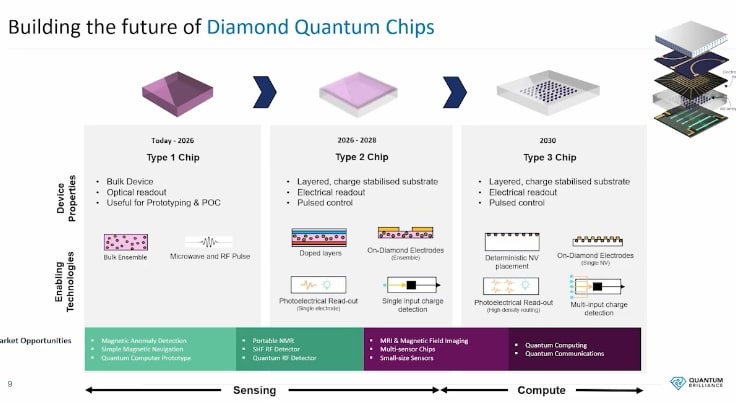
Quantum Brilliance’s is developing diamond quantum accelerators that will have over 50 qubits and outperform CPUs/GPUs of comparable size, weight and power in important applications. Quantum Brilliance believe their diamond integrated chips can be mass produced in the millions and can work along side regular chips as useful accelerators and sensors. They could also have versions that can work as global positioning without using satellites.
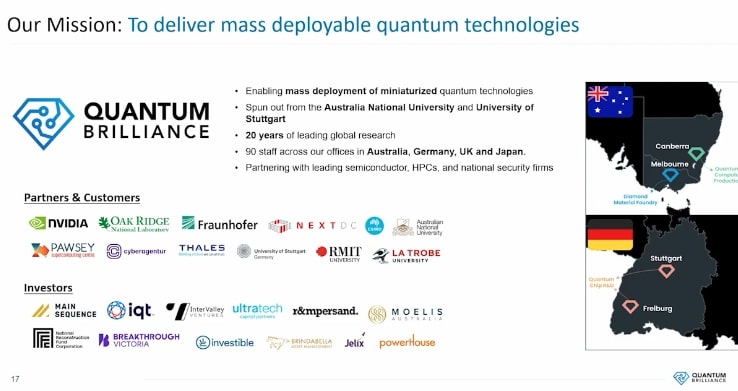
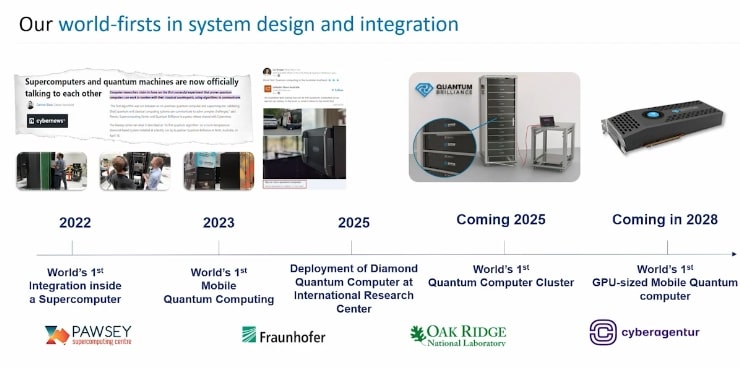
Oak Ridge National Lab installed Quantum Brilliance computer system at the Oak Ridge Leadership Computing Facility. Lab staff will use ORNL’s first on-site, commercial quantum computer cluster to explore ways to integrate this emerging technology into classical high-performance computing infrastructures and tap its potential for massive computational power gains.
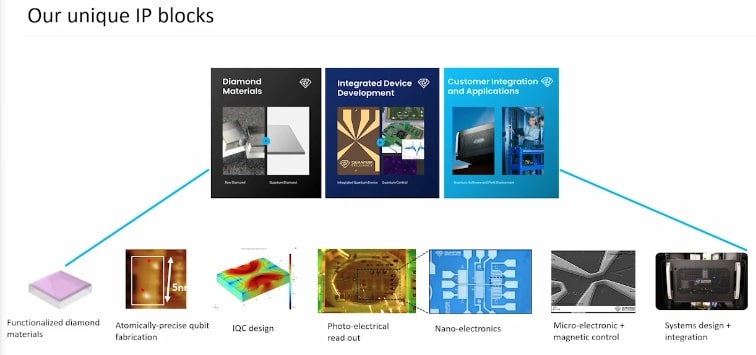
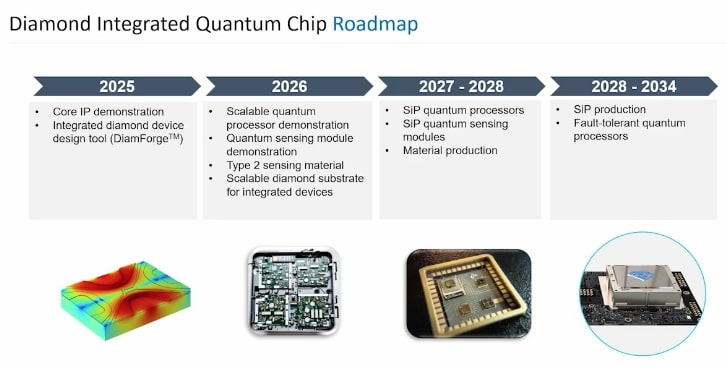
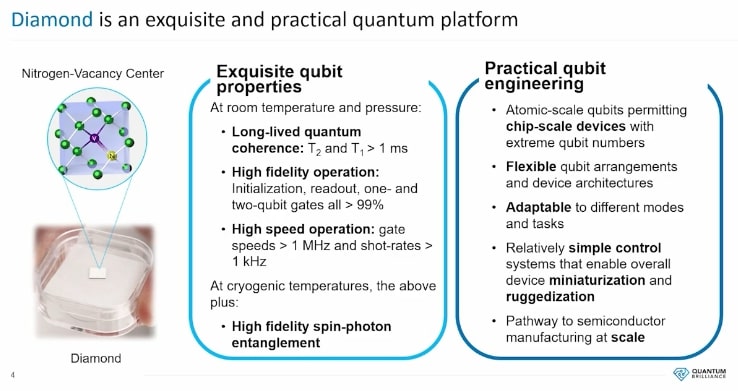
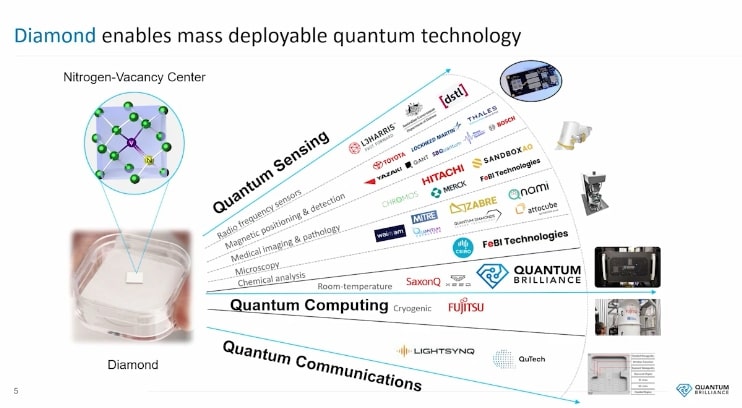
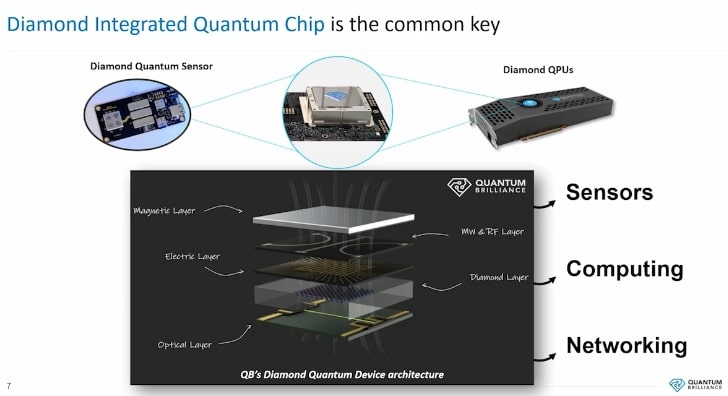
One of Quantum Brilliance’s key inventions is a ‘bottom-up’ atomically-precise fabrication technique for diamond that circumvents limitations through designer surface chemistry and lithography. The technique draws inspiration from the atom-scale fabrication techniques for silicon that were pioneered in Australia.
Quantum Brilliance aims to utilize nitrogen vacancies in diamond to create qubits, offering a more compact and power-efficient alternative to cryogenic quantum systems.
A 2022 collaboration between a Japanese jewelry firm and academic researchers led to a new method for producing ultra-pure 2-inch diamond wafers.
By parallelizing over many quantum accelerators, rather than just one quantum mainframe, QM/MM simulations of systems of many interacting molecules becomes possible. Thus, enabling a dramatic increase in the size, accuracy and scope of MD simulations. For example, the study of multiple reactions and conformation changes within a system of biochemicals in drug design or the impact of reaction byproducts during chemistry at a solid-liquid interface in catalysis design.

Brian Wang is a Futurist Thought Leader and a popular Science blogger with 1 million readers per month. His blog Nextbigfuture.com is ranked #1 Science News Blog. It covers many disruptive technology and trends including Space, Robotics, Artificial Intelligence, Medicine, Anti-aging Biotechnology, and Nanotechnology.
Known for identifying cutting edge technologies, he is currently a Co-Founder of a startup and fundraiser for high potential early-stage companies. He is the Head of Research for Allocations for deep technology investments and an Angel Investor at Space Angels.
A frequent speaker at corporations, he has been a TEDx speaker, a Singularity University speaker and guest at numerous interviews for radio and podcasts. He is open to public speaking and advising engagements.
The article briefly mentions using this for navigation without GPS. Is this an improved version of inertial navigation, or is there some technology I have never heard of that can do that?
it would be quantum sensor version of inertial navigation
A quick primer:
https://www.advancednavigation.com/tech-articles/the-future-of-inertial-navigation-is-classical-quantum-sensor-fusion/
Diamonds are forever… unless there’s a fire. Did you know diamonds, being carbon, will burn up in a fire?
Technically, diamonds are only for 10^80 years or so. They’re only metastable, they break down into graphite.
Just very slowly at room temperature…