
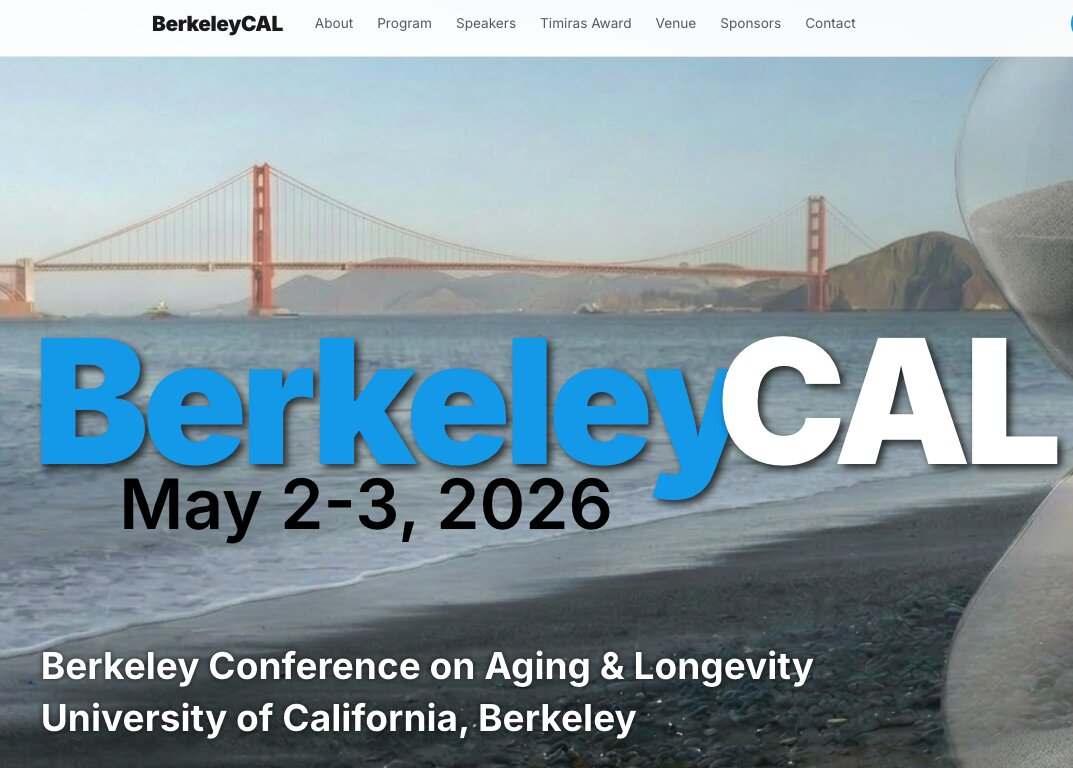
BerkeleyCAL is convening a select group of scientists, technologists, and global thought leaders at the University of California, Berkeley on May 2nd and 3rd to explore the frontiers of aging, longevity science, and their broader societal impact. The conference will feature a keynote by Her Royal Highness Dr. Haya Al Saud alongside prominent scientists such as: Cynthia Kenyon, Felipe Sierra, Michael D. West and Aubrey de Grey.
I, Brian Wang, will also have a short talk at the cozy conference.
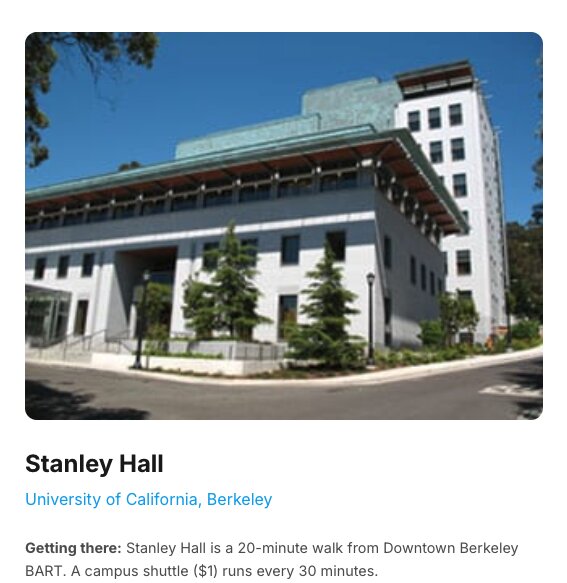
It is at Stanley Hall in Berkeley.
There should also be Agua Via a company working on molecularly precise membranes for revolutionizing water.
It is $10 for students and $299 for general admission.
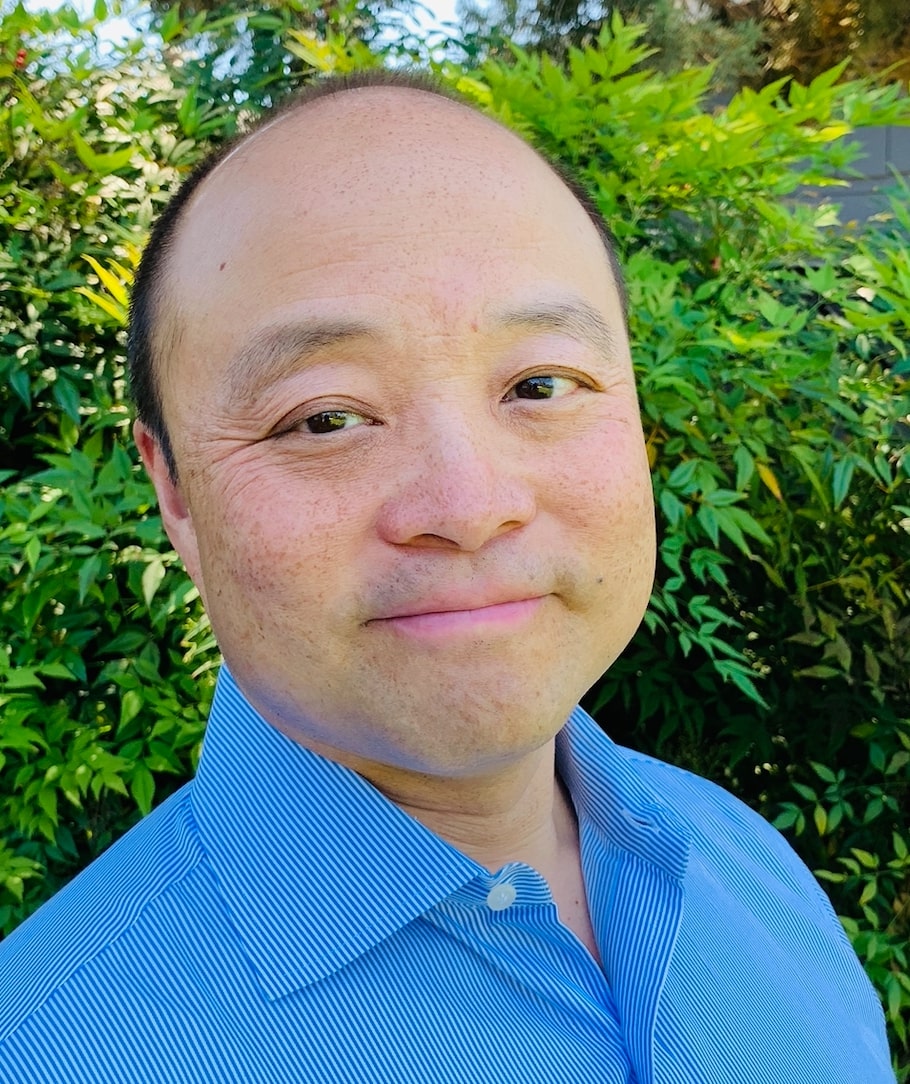
Brian Wang is a Futurist Thought Leader and a popular Science blogger with 1 million readers per month. His blog Nextbigfuture.com is ranked #1 Science News Blog. It covers many disruptive technology and trends including Space, Robotics, Artificial Intelligence, Medicine, Anti-aging Biotechnology, and Nanotechnology.
Known for identifying cutting edge technologies, he is currently a Co-Founder of a startup and fundraiser for high potential early-stage companies. He is the Head of Research for Allocations for deep technology investments and an Angel Investor at Space Angels.
A frequent speaker at corporations, he has been a TEDx speaker, a Singularity University speaker and guest at numerous interviews for radio and podcasts. He is open to public speaking and advising engagements.
Best Longevity news this week:
Clearance of Senescent Cells by BCLXL-PROTAC: A Novel Approach to Treat COPD?
https://onlinelibrary.wiley.com/doi/10.1111/acel.70487
tl;dr – PROTACs which degrade the proteins that prevent cell death in senescent cells might work better than current approaches. Also there are probably lots of different types of senescent cells using different survival pathways and proteins, or combinations of them. Different PROTACS could target all of these pathways leading to better overall senescent cell clearance in aged individuals. Current small molecule approaches such as dasatinib + quercetin are probably only taking out some percentage of senescent cells.
(The linked paper is open access too)
Eventually we’ll see if Kurzweil was right:
A Scientist Says Humans Are Rapidly Approaching Singularity—and Plausible Immortality
“By the 2040s or 2050s, Kurzweil believes that we will have rebuilt our bodies and brains far beyond what we know today. “As nanotechnology takes off, we will be able to produce an optimized body at will,” he said. “We’ll be able to run much faster and long, swing and breathe under the ocean like fish, and even give ourselves working wings if we want them. We will think millions of times faster, but more importantly, we will not be dependent on the survival of any of our bodies for our selves to survive.””
See:
https://www.popularmechanics.com/science/health/a61099179/humans-singularity-immortality-raymond-kurzweil/
The biggest anti aging intervention you can make is lifestyle: enough sleep and good quality one, lots of clean water, no poison like sugar or too many carbs, quality food and not a lot of it – fasting and some sports.
The thing is foods like blueberries or teas like green tea can contain up to 10000 compounds.
Out of that 5-10 % are known, others are all unknown.
And out of 5-10% about few to 40 are studied a bit more in depth.
So taking supplement you miss the all other compounds in the food matrix and their synergy. And pharma has interest to sell you all the supplements with their marketing and bogus crappy claims,… So you get one to few supplements and miss all the rest beneficial ones,… And the most known if not necessary the most beneficial, there are absorption problems, what is actually absorbed.
So real food is the best thing. But for supplements I think: Vitamin D with k2 is very important. Salt with iodine is necessary. Lack of iodine makes you dumb. About 1 table spoon a day if you dont get it with food. But in most cases you get it with food. And magnesium is very important mineral for all the processes in the body.
From drugs Metformin and Rapamycin have evidence that they work.
General logic is: why fix bad habits, illness, lousy food with expensive supplements and medications? Why not fix the cause instead and you dont need all the crappy supplements.
None of this moves the needle for actual lifespan extension. Wellness is all good, and well… but it shouldn’t be conflated with actual pursuit of technology that extends the phenotype beyond it’s average and recorded maximum… ~120 years.
Majority of anti aging researchers like Sinclair, Valter Longo,.. strongly advocate lifestyle, habits, eating,… as the primary life extension and health intervention you can make. This is what they say, after all they study it professionally. If they will discover medical ways to extend lifespan is another thing. But until then we should not rely too much on that.