
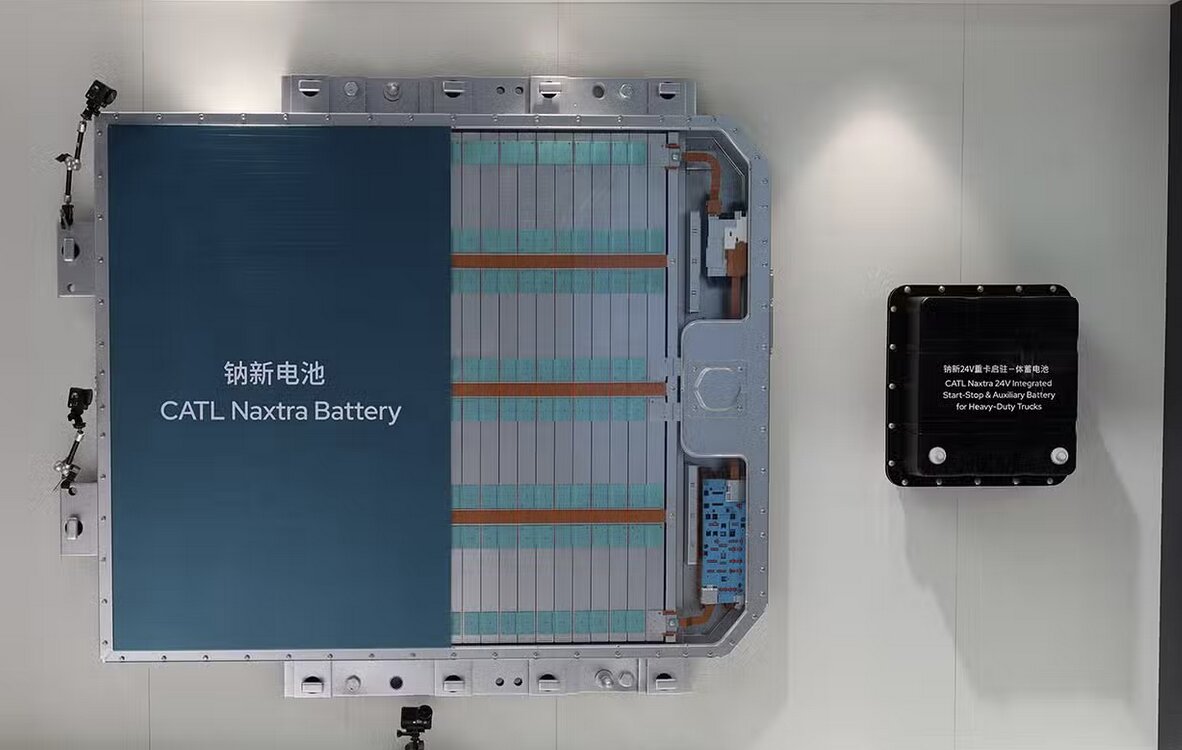
CATL will invest 5 billion yuan ($735 million) to significantly expand its sodium battery capacity by an added 40 GWh per year.
According to a public document released on Thursday by environmental authorities in Ningde, Fujian province — CATL’s headquarters city — the expansion project will add 40 GWh of annual production capacity for sodium-ion power batteries.
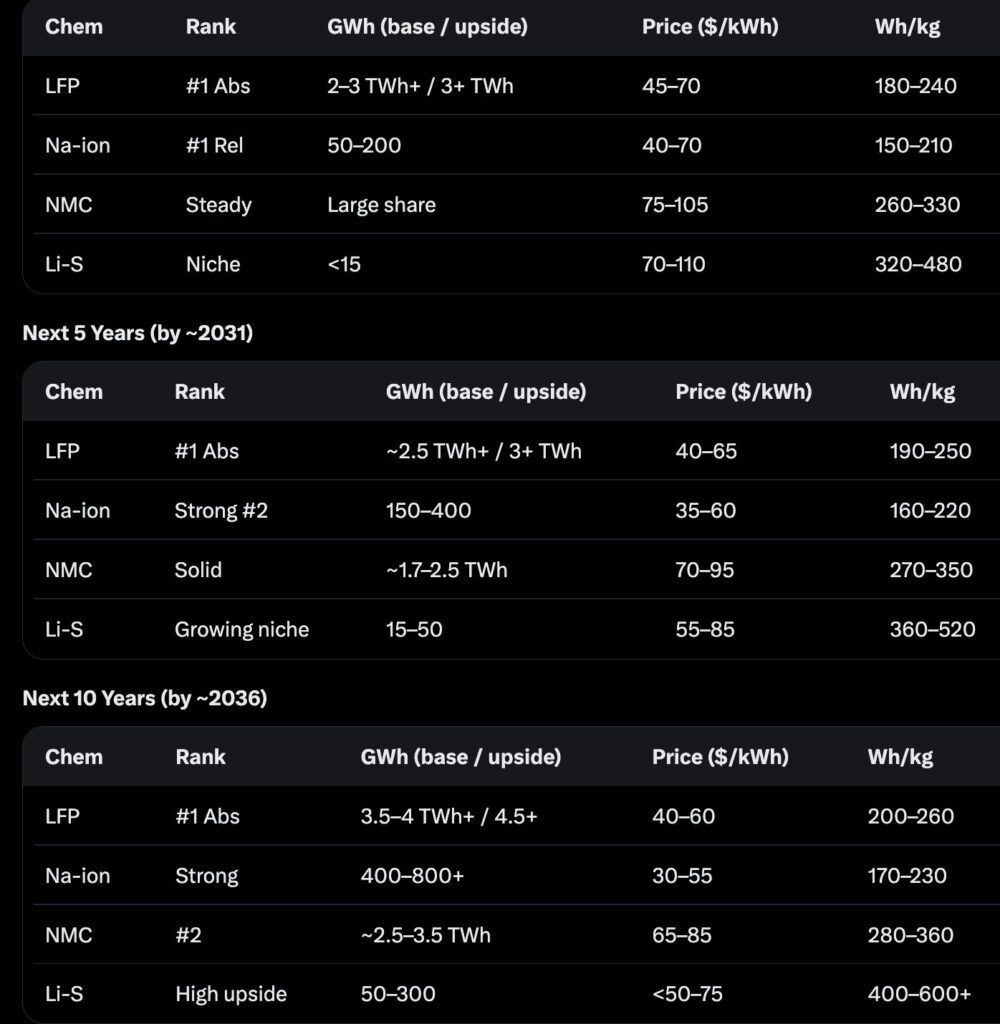
CATL (China) — Mass production of Naxtra sodium-ion batteries (up to 175 Wh/kg, 15,000+ cycles) started 2026. Recently announced 40 GWh per year dedicated sodium-ion expansion in Fujian and this is part of larger site plans to reach 149 GWh per year total. They secured world’s largest order (60 GWh over 3 years for energy storage with CATL and Chinese energy storage system provider HyperStrong. CATL is the dominate 2026 leader in sodium ion batteries and lithium ion batteries.
BYD (China) — Strong #2. Dedicated 30 GWh sodium-ion plant (Xuzhou/Xining area. construction ongoing since 2024) ramping in 2026. Third-generation cells with up to 10,000 cycles and blade-style format. BYD is targeting entry-level EVs and storage. BYD has neear term targets of ~50 GWh per year in sodium ion batteries.
HiNa Battery (China) — Pioneer with commercial deployments (energy storage, low-speed EVs). Large-scale automated lines already running. Expanding Qinghai projects in the 5 GWh range. Smaller than CATL/BYD but established GWh-scale output.
Faradion (UK/Reliance Industries, India) + smaller players like Tiamat in France ~5 GWh factory plans, Altris in Sweden ~0.175 GWh, KPIT/Trentar in India ~3 GWh, Peak Energy in US targeting later ramp. Mostly pilot-to-early GWh or sub-GWh in 2026. Natron Energy (US, Prussian blue tech) ceased operations in late 2025.
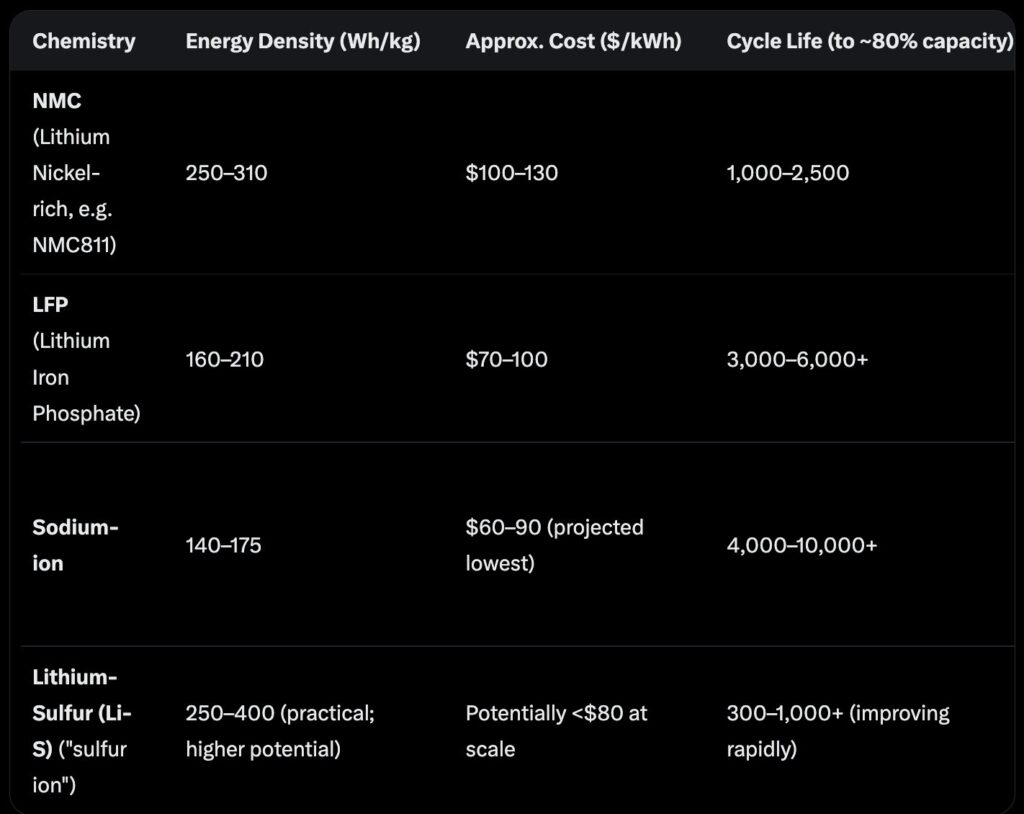
Sodium ion batteries have the potential to be the cheapest battery and one with the materials to scale the most.
Brian Wang is a Futurist Thought Leader and a popular Science blogger with 1 million readers per month. His blog Nextbigfuture.com is ranked #1 Science News Blog. It covers many disruptive technology and trends including Space, Robotics, Artificial Intelligence, Medicine, Anti-aging Biotechnology, and Nanotechnology.
Known for identifying cutting edge technologies, he is currently a Co-Founder of a startup and fundraiser for high potential early-stage companies. He is the Head of Research for Allocations for deep technology investments and an Angel Investor at Space Angels.
A frequent speaker at corporations, he has been a TEDx speaker, a Singularity University speaker and guest at numerous interviews for radio and podcasts. He is open to public speaking and advising engagements.
I find that the CEOs of CATL and BYD are similar to Elon in one sense: they are overly optimistic on timelines and sometimes overly optimistic on solving manufacturing challenges.
Sodium Ion batteries are still miles behind on energy density and cost of KiloWatt-hour per pound/kilogram battery cell. The anode issues haven’t been solved, as well as ongoing foil bonding issues.
CATL claim to have overcome the severe moisture control and gas generation issues, but again, not at a scale to challenge the current performance and cost advantages of lithium ion batteries.
I see a use case for sodium ion batteries for grid storage, but not until the current manufacturing problems are worked out. CATL and BYD exaggerate their current progress.
Elon had the same issues with 4680 cells. Prototypes are easy. Manufacturing a cost-effective product with high yeilds is hard.
Good luck to everyone involved.
Getting 50 $ for one kWh will be amazing , at that price , I will buy minimum 50 kWh to cover my house