29th Moon Found at Uranus

Using NASA’s James Webb Space Telescope, a team led by the Southwest Research Institute (SwRI) found a previously unknown moon orbiting Uranus, expanding the planet’s known satellite family to 29. The detection was made during a Webb observation Feb. 2, 2025. The newly discovered moon is estimated to be just six miles (10 kilometers) in …

Read more

New Telescope Spots First Two Thousand of Expected 5 Million Asteroid Detections

The Vera Rubin Telescope Observatory is now operational and is enable astronomers to explore galaxies, stars in the Milky Way, objects in the solar system, and all in a truly new way. In its first 10 hours of test observations, the observatory has discovered 2,104 never-before-seen-asteroids, including seven near-Earth asteroids, none of which pose any …

Read more

Fluidic Space Telescopes For 25X More Power at the Same Cost

Larger telescopes are better because we can see better and capture more light, so NASA is developing liquid based space telescopes that would let us build 50 meter telescopes for the cost of 10 meter telescopes. The future of space-based UV/optical/IR astronomy requires ever larger telescopes. The highest priority astrophysics targets, including Earth-like exoplanets, first …

Read more

Vera Rubin Telescope Could Detect Mars, Mercury And Pluto Sized Planets from 2025-2035

Researchers estimate that the number of captured free-floating planets in the outer solar system with mass strictly greater than that of Mars is ∼1.2 and that the number of such planets with a strict cutoff at the mass of Mercury is ∼2.4. When they instead adopt logarithmic bins centered at the Mars mass and the …

Read more

Double the James Webb Space Telescope Mirror With SpaceX Starship Telescope

Felix Schlang at What About It?, ercxspace on twitter and adonaisf have rendered a space telescope built inside the structure of a SpaceX Starship. Elon Musk has said SpaceX is working on designing a Space Telescope built into a Starship. The Hubble space telescope mirror is 2.4 meters across. The James Webb Space Telescope’s primary …

Read more

Maximizing Swarms of Interstellar Laser Pushed Gram Spacecraft Missions

Tiny gram-scale interstellar probes pushed by laser light are likely to be the only technology capable of reaching another star this century and a NASA NIAC phase 1 study wants to work out the additional issues to coordinate several thousands one gram solar sails into a coordinated mission that can communicate back to Earth from …

Read more

Hypertelescopes on the Moon Can Have Better than 1 Microarcsecond Resolution

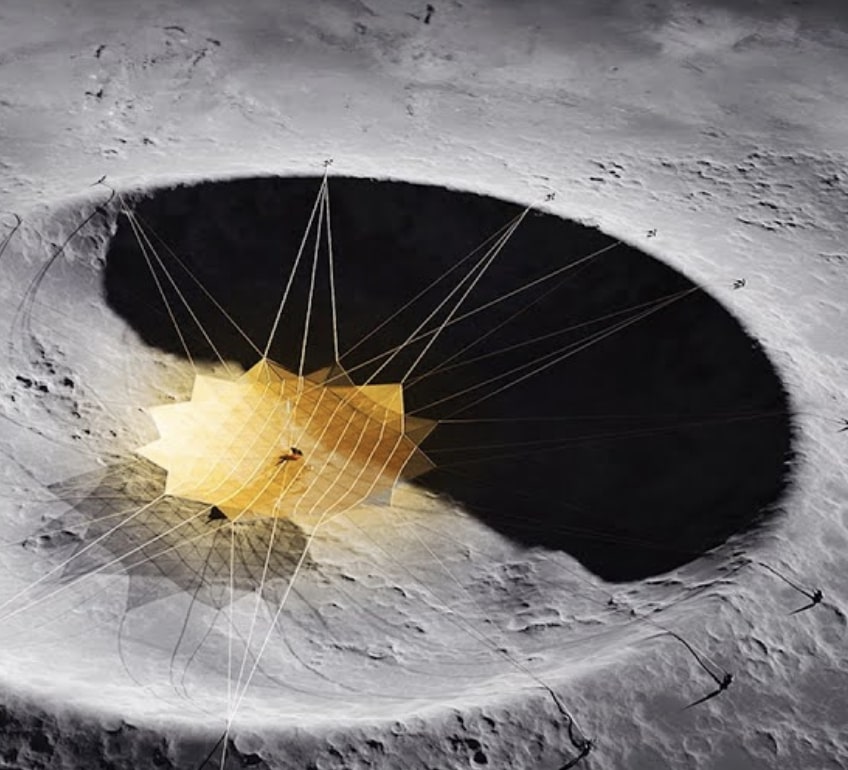
Nextbigfuture commenter, Goat Guy, verified the resolution of very large hypertelescopes and optical interferometers. The highest angular resolutions for telescopes can be achieved by arrays of telescopes called astronomical interferometers. Hypertelescopes are being worked on that would combine many, many telescopes into very large arrays of tens, hundreds and even space based arrays of one …

Read more

Biomarkers of Microbial Life Detected on Neptune Sized Water World

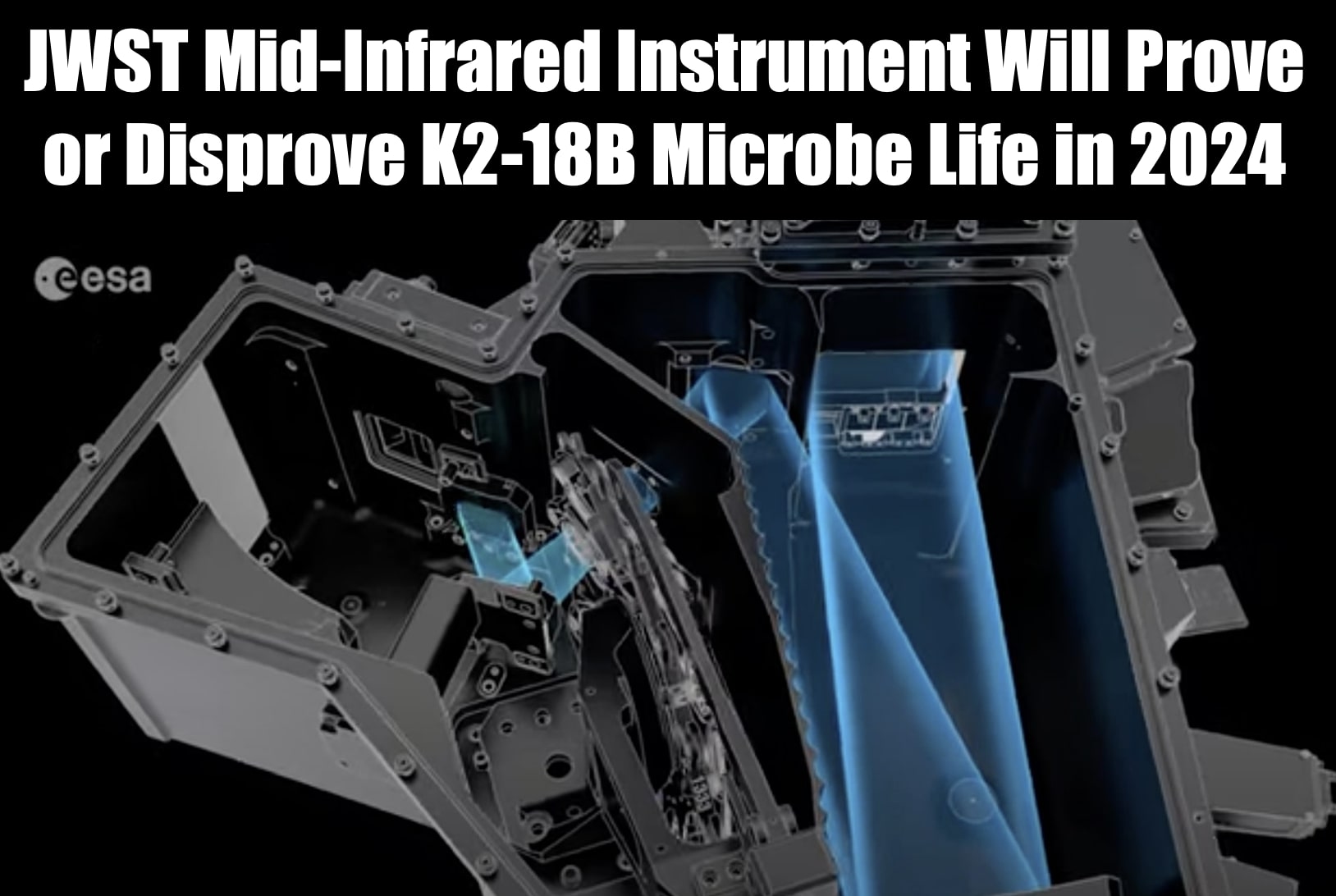
NASA’s James Web found trace of dimythyl suflide (DMS) in th atmosphere of exoplanet K2-18b and DMS is a biomarker of life. K2-18b’s atmosphere consists of mainly hydrogen, along with small amounts of methane and carbon dioxide. On Earth, the DMS molecule is only associated with microbial life. We have to wait for the existence …

Read more

James Webb Telescope Sees Exoplanet Might Have Be covered With a Liquid Water Ocean

NASA’s James Webb Space Telescope observed K2-18 b whic an exoplanet 8.6 times as massive as Earth. It is showing the presence of carbon-bearing molecules including methane and carbon dioxide. Webb’s discovery adds to recent studies suggesting that K2-18 b could be a Hycean exoplanet, one which has the potential to possess a hydrogen-rich atmosphere …

Read more