Electric Signal Detection from Single Molecules for Molecular Electronics Revolution

The barrier to molecular electronics was the previous inability to detect the tiny electric signals from single molecules. Roswell Biotechnologies overcame that problem and integrated the solution with CMOS. This enables an interface between molecules for sensors and DNA and other biological detections with CMOS. Nanopores have existed for a long time and being able …

Read more

Eventual Exabyte DNA Storage on Roswell Molecular Electronic Chips

James Tour says that Roswell is bringing to world the $100 genome that can scale rapidly and also deliver Exabyte data storage. Paul Mola is the Founder, and CEO of Roswell Biotechnologies. Roswell could enable DNA storage technology. This would have exabyte capabilties. They have millions to billions of DNA readers on CMOS ships. They …

Read more

Reading and Writing Genomes

Reading and Writing DNA has improved 2 to 10 times faster than Moore’s Law over the last 35 years. There has been over 10 million times improvement. Molecular and cell multiplexing enable atomically precise reactions at 1 trillion reactions per droplet. George Church gave a talk about reading and writing whole genomes. George Church giving …

Read more

DNA Nanobots Used Bacteria’s Chemical Communication and This Enables Intelligent Nanobot Swarms

Bio-inspired Quorum Sensing in robots fabricated from DNA origami can communicate by transmitting and receiving diffusing chemical signals. The mechanism has features such as programmable response thresholds and quorum quenching, and is capable of being triggered by proximity of a specific target cell. Nanoscale robots with swarm intelligence could carry out tasks that have been …

Read more

Fast and Compact DNA Logic Circuits

DNA is a reliable biomolecule with which to build molecular computation systems. DNA logic circuits (diffusion-based) have shown good performance regarding scalability and correctness of computation. However, previous architectures of DNA logic circuits have two limitations. 1. The speed of computation is slow, often requiring hours to compute a simple function. 2. The circuits are …

Read more

Better Gene Editing than CRISPR

George Church describes going beyond cutting DNA to precise editing. 1. Phage Integrases (Protein and DNA) 2. TAL Deaminases (custom Protein) 3. Chemical Targeting (custom polymer) 4. lambda (λ)-red recombinase (Custom DNA) Beyond editing to writing large genomes DNA-based target recognition For DNA-based target recognition systems, the two major approaches, multiplex automated genome engineering (MAGE) …

Read more

Delivery of 45 Age Reversing Gene Therapies at Once is Under Peer Review

George Church revealed progress on aging reversal using gene therapies. They have delivered 45 gene therapies to provide aging reversal. They find the combined treatment is effective against obesity, diabetes, osteoarthritis, cardiac damage and kidney disease. At 32:00-33:30 minutes George Church specifically describes delivering 45 age reversing gene therapies to treat multiple age related diseases. …

Read more

Woolly Mammoths would prevent the permafrost from melting and help save the planet

The goal of woolly mammoth project is to solve the permafrost climate issue. The top area of the world is covered in permafrost. The Siberian and Canadian tundra is this mass of permafrost and that permafrost is a ticking time bomb it contains within it more carbon, carbon dioxide and methane than if we burned …

Read more

George Church talks about reversing human aging and claims they made mice live twice as long

George Church is developing better and better organs using pigs. They are working to slow or reverse the aging in the organs to be used for transplant. [about 8:40 in the video] He says the organ longvity has also been done successfully with entire mice. They have mice that live twice as long. He says …

Read more

Programmed DNA origami nanobot kills cancer in mice

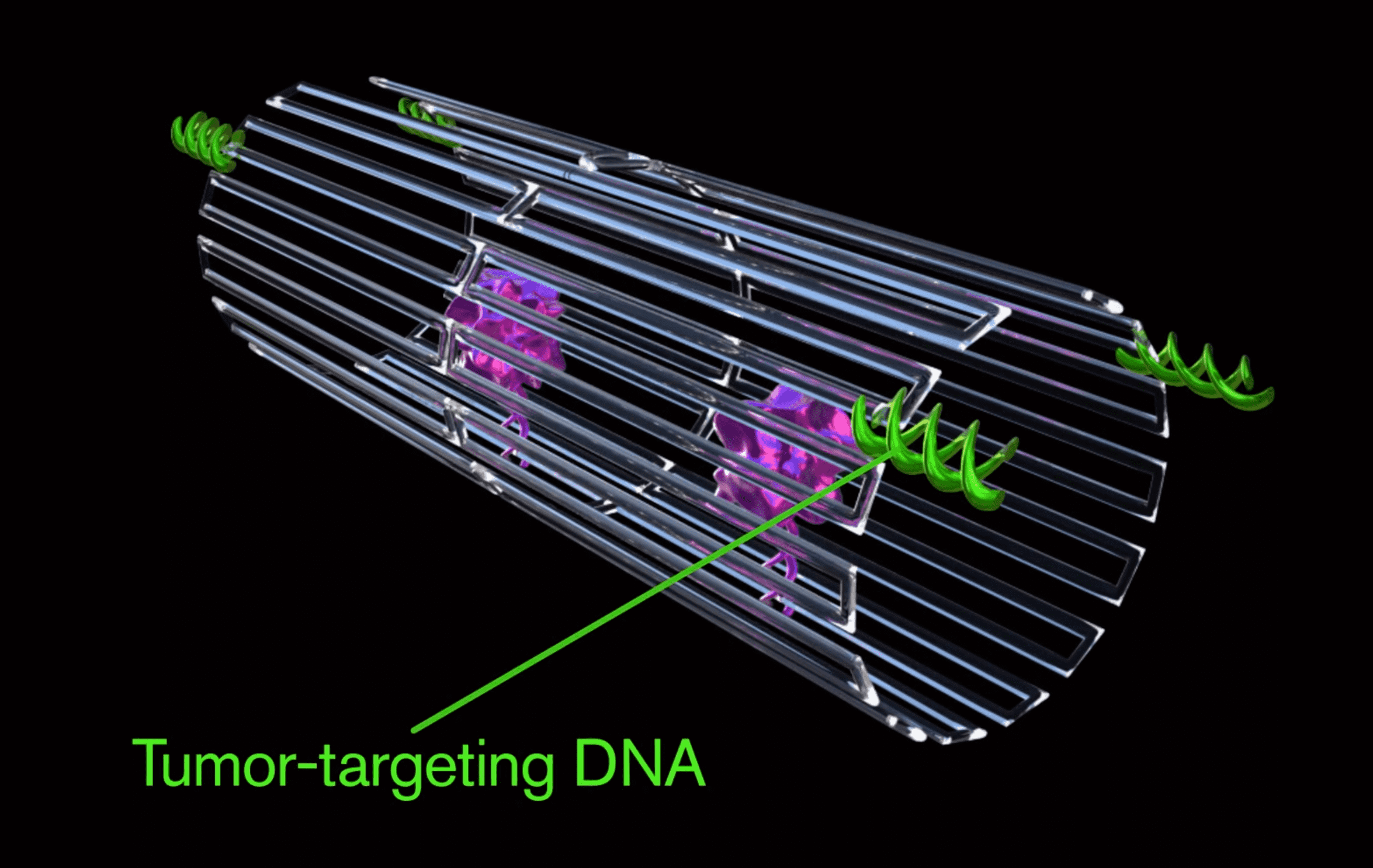
Arizona State University (ASU) scientists, in collaboration with researchers from the National Center for Nanoscience and Technology (NCNST), of the Chinese Academy of Sciences, have successfully programmed nanorobots to shrink tumors by cutting off their blood supply. Above – Nanorobots can be programmed to transport molecular payloads and cause on-site tumor blood supply blockages, which …

Read more